At Equitopia, we envision a world where humans live in harmony with horses based on a deep understanding and regard for the horse’s needs in today’s world
The Importance of Relaxation in both Horse and Rider
Get link
Facebook
X
Pinterest
Email
Other Apps
The definition of relaxation includes “the lengthening of inactive muscles or muscle fibers” and “the return or adjustment of a system of equilibrium following displacement or abrupt change.” Relaxation should exist on three levels: Physical (suppleness), mental (clarity of mind and emotion) and spiritual (freedom from fear, anger, resentment, jealousy and other negative attitudes). The three are related in both humans and horses. Physical relaxation can be destroyed by confusion or fear, thus it is not a simple matter of controlling the length of muscle fibers. In most cases when the mind is the cause of tension, stress, fear or confusion we must try to relax our mind. Even if the cause requires a solution, the starting point is a relaxed mind that can focus. If we hope to achieve physical relaxation, we need to address the methods of promoting mental and spiritual relaxation since they are so closely connected.
HORSE AND HUMAN IN HARMONY
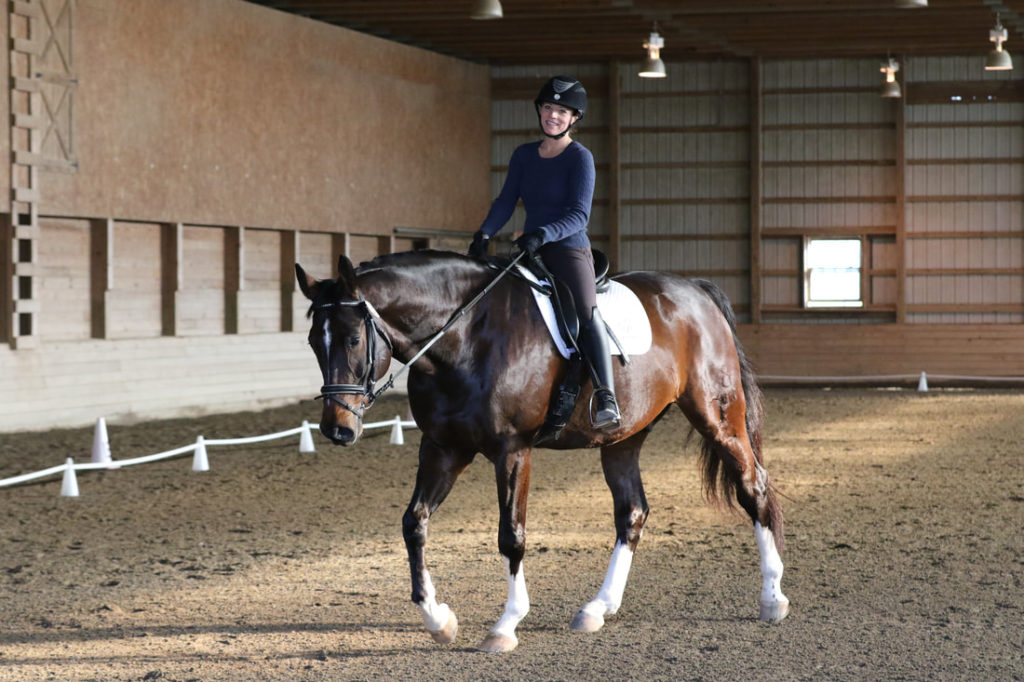
Relaxation has many benefits in terms of both performance and soundness. Communication is more straightforward when we are relaxed. Both observer and horse feel the rider is lighter and more graceful. Our body will move in harmony with the horse’s movements. Our legs will breathe with the horse’s sides. Our hands will be quiet receivers and directors of the forward energy we are sharing. Our body as a whole will be prepared to respond to the horse quickly, quietly, and effectively. This harmony will enable both horse and rider to move forward with power and elasticity, creating a picture of total unity and majesty. A relaxed horse is an amazingly elastic creature, and therefore our goal should be to maintain this elasticity. It involves careful management of his physical body, slowly building up muscle tone. Most horses have an advantage over man, in that they begin with a calm mind. If communications are clear and demands are realistic, they should remain mentally calm. This mental calmness, combined with the proper training of horse and rider, should maintain the horse’s elasticity, thus minimizing the wear and tear that cause unsoundness in our equine partners.
No doubt it is easier for a rider to relax on a horse who is relaxed, but the rider must learn to become supple and relaxed himself so that the horse can stay elastic and relaxed. It is the rider’s responsibility to maintain the relaxation of the horse.
It is more difficult for the rider to maintain a relaxed state, because the rider continues to have situations develop that make it difficult to maintain a relaxed, supple body. It is up to the rider to find an effective method to maintain a well functioning body.
Emotional turmoil produces disequilibrium in our bodies, leading to physical stiffness. Returning the body to equilibrium is a matter of relaxation. When we feel upset, or experience an uneasy feeling, an upset stomach, a headache, a backache, or another physical symptom, it may be our mental or spiritual self crying out. Physical exercises are designed to relax and supple the muscles, while meditative therapies provide methods to relax and free the body, mind and spirit.
The more of our self we can access consciously, the more control we have over our lives and our goals. The more unresolved experiences we have, the more we will need to create freedom that brings about the useful inner self. By having control over our thoughts and experience we come more relaxed in who we are, our goals and our dreams. This is key in our relationships, even our relationship with our horse. Relaxation is necessary for the rider to attain inner harmony and for the horse to display his natural beauty.
IF YOU LIKED THIS POST, YOU MIGHT ALSO BE INTERESTED IN:
In the world of equestrianism, the relationship between horse and rider is a delicate dance that requires skill, understanding, and a profound connection. For those dedicated to the art of horse training, the Equitopia Center stands as a beacon of knowledge and resources. This unique institution is not just a stable; it's a hub where trainers can access a wealth of information, expertise, and cutting-edge techniques to elevate their craft. In this blog, we'll explore the invaluable horse trainer resources that make Equitopia Center a haven for those passionate about mastering the art of equine communication. Comprehensive Educational Programs: Equitopia Center takes pride in offering comprehensive educational programs designed to cater to trainers of all levels. From foundational courses in horse behavior and psychology to advanced training techniques, the center provides a structured learning path that enables trainers to deepen their understanding of equine communicatio...
Does horse riding fix posture? Horse riding can contribute to improving posture , but its impact may vary from person to person. Riding a horse requires core strength, balance, and coordination, which can help engage and strengthen various muscle groups, including those responsible for maintaining good posture. Here are some ways in which horse riding may positively influence posture: Core strength: Riding engages the muscles in your core, including the abdominal and back muscles. Strengthening these muscles can contribute to better posture. Balance and stability: Maintaining balance on a moving horse requires the activation of stabilizing muscles throughout the body. This can help improve overall stability and balance, which are important aspects of good posture. Flexibility: Riding involves a range of movements that can enhance flexibility in the hips, pelvis, and spine. Improved flexibility can contribute to better posture by allowing for a more na...
null Welcome to Equitopia Center, where we delve deep into the world of equine care, training, and horsemanship. Today, we embark on a journey to explore one of the fundamental aspects of riding: the riding position . Mastering the riding position is akin to finding harmony between horse and rider , where communication flows seamlessly, and balance is the key to success. Whether you’re a novice rider or a seasoned equestrian, refining your riding position is an ongoing process that requires dedication, awareness, and practice. Understanding the Importance of Riding Position The riding position serves as the foundation upon which all other riding skills are built. It encompasses the alignment of the rider’s body, from head to toe, and directly influences the horse’s movement, balance, and responsiveness. A correct riding position not only enhances communication with the horse but also promotes safety and efficiency in the saddle. Elements of a Correct Riding Posit...


Comments
Post a Comment